|
|
Big Five and Unique Small Five -
Grandes 5 y Pequeños
5 Unicos
Many people come to
Africa to experience the wilderness and come to our parks to
have a close encounter with the BIG 5, but we also have our
unique small 5 which should not be taken for granted by our
visitors, they are also part of our African Adventure together
with the Landscapes, Flora and all the other magnificent
Animals that our wildlife has to offer.
Mucha gente viene a África
para experimentar la naturaleza salvaje y a nuestros parques
para tener un encuentro cercano con los Cinco Grandes, pero
también tenemos nuestros cinco pequeños, únicos en su especie,
que nuestros visitantes no deben dar por sentado; ellos también
forman parte de nuestra aventura africana junto con los
paisajes, la flora y todos los demás animales magníficos que
nuestra vida salvaje tiene para ofrecer.
|
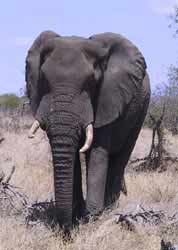
Big 5
- Gran 5
Elephant
- Elefante
|
Small 5
- Pequeño
5
Elephant Shrew
Musaraña
elefante
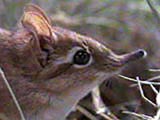
Rhynchoycon and Petrodromus are largely confined to lowland
and montane forests and dense woodlands, while Elephantulus and
Macroscelides are found in more arid lowlands, such as savannahs,
scrublands, rocky outcrops, and deserts. In nearly all cases, sengis
are found in low densities compared to many other small mammals
(FitzGibbon 1995, Perrin 1995b)
Rhynchoycon y Petrodromus
se encuentran principalmente en bosques de tierras bajas y
de montaña, así como en zonas boscosas densas, mientras que
Elephantulus y Macroscelides habitan en tierras bajas más
áridas, como sabanas, matorrales, afloramientos rocosos y
desiertos. En casi todos los casos, los sengis se encuentran
en bajas densidades en comparación con muchos otros
mamíferos pequeños (FitzGibbon 1995, Perrin 1995b)..
|
|
At low latitudes reproduction is
continuous, but at higher latitudes it is seasonal (Neal 1995). All sengis prey on invertebrates, although most soft-furred species
supplement this diet with small fruits, seeds, and green plant
matter (Rathbun 1979, Kerley 1995). Snakes, raptors, and carnivores
are known predators of sengis. A wide variety of parasites are
hosted by macroscelids (Fourie et al. 1995).
Shrews are
probably the most successful of the ground-dwelling mammals known as
insectivores. There are around 275 shrew species in all. Even though
shrews and other small mammals such as moles and hedgehogs are
placed together in the order Insectivora, they are not actually
related. Their size ranges from mouse to rabbit size.
En latitudes
bajas, la reproducción es continua, pero en latitudes más altas es
estacional (Neal 1995). Todos los sengis se alimentan de
invertebrados, aunque la mayoría de las especies de pelaje suave
complementan esta dieta con pequeños frutos, semillas y materia
vegetal verde (Rathbun 1979, Kerley 1995). Se sabe que las
serpientes, las aves rapaces y los carnívoros son depredadores de
los sengis. Los macroscélidos albergan una gran variedad de
parásitos (Fourie et al. 1995).
Las musarañas son probablemente los mamíferos terrestres
insectívoros más exitosos. Existen alrededor de 275 especies de
musarañas. Aunque las musarañas y otros pequeños mamíferos como los
topos y los erizos se clasifican juntos en el orden Insectivora, en
realidad no están emparentados. Su tamaño varía desde el de un ratón
hasta el de un conejo.
|
|
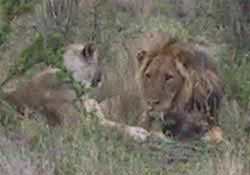
Lion -
Leon
 |
Ant Lion -
Hormiga Leon
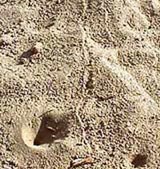
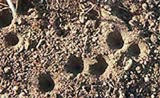
The
antlion larva digs its pits in dry, sunny spots sheltered from wind
and rain, particularly on south-facing slopes. The soil must be
light and easy to shift. Pushing itself backward, the larva first
draws a circle on the ground. Then, digging deeper and deeper, it
spirals in toward the centre.
La larva
de la hormiga león excava sus madrigueras en lugares secos y
soleados, protegidos del viento y la lluvia, especialmente
en laderas orientadas al sur. El suelo debe ser ligero y
fácil de remover. Empujándose hacia atrás, la larva primero
dibuja un círculo en el suelo. Luego, excavando cada vez más
profundo, se adentra en espiral hacia el centro. |
|
The dirt that is dug out is thrown
out energetically with the head. After only about 15 minutes, the antlion has made a funnel-shaped crater in the earth. The antlion
larvae prepare the sides of their pits with fine sand or soil
particles so ants that fall in can't climb out, and land in the jaws
of the "doodlebug" waiting at the bottom. It buries itself at the
bottom so that only the head, with opened jaws, can be seen, and
there it waits for its prey.
Antlion larvae eventually
pupate in the soil, becoming adult insects that look somewhat like
dragonflies, except that they are more fragile and are weak fliers..
Antlions are beneficial to man because of their ant diet and they
cause no problems.
La tierra que
excavan es expulsada enérgicamente con la cabeza. En apenas 15
minutos, la hormiga león ha creado un cráter en forma de embudo. Las
larvas preparan los lados de sus madrigueras con arena fina o
partículas de tierra para que las hormigas que caen no puedan salir,
y aterrizan en las fauces de la hormiga león que las espera en el
fondo. Esta se entierra hasta el fondo, dejando solo visible la
cabeza con las fauces abiertas, y allí aguarda a su presa.
Las larvas de hormiga león finalmente pupan en el suelo,
convirtiéndose en insectos adultos que se parecen un poco a las
libélulas, aunque son más frágiles y tienen menos habilidad para
volar. Las hormigas león son beneficiosas para el ser humano debido
a su dieta a base de hormigas y no causan ningún problema.
|
|
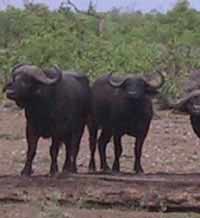
Buffalo
- Bufalo
|
Buffalo Weaver
- Pajaro tejedor Bufalo
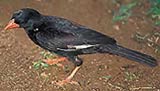
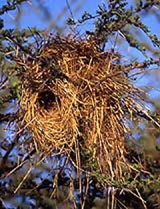
Locally, they are a common bird found in East Africa.
Buffalo weavers nest in open, loose colonies. The nest is built high
in a tree in a fork of branches. It is a large, rather untidy
structure of twigs and coarse grasses.
Social weavers
(Philetairus socius) build huge nests, the most complex of all avian
structures. The birds are sparrow-like in size and appearance. The
individual birds join forces and weave a grass roof in the branches
of a tree. They then weave vertical tunnels upward that widen into
chambers just under the roof.
Localmente,
son aves comunes en África Oriental. Los tejedores búfalo anidan
en colonias abiertas y dispersas. Construyen el nido en lo alto
de un árbol, en la bifurcación de las ramas. Es una estructura
grande y algo desordenada, hecha de ramitas y hierbas toscas.
Los tejedores sociales (Philetairus socius) construyen nidos
enormes, las estructuras aviares más complejas. Estas aves son
de tamaño y apariencia similares a las de los gorriones. Los
individuos se unen y tejen un techo de hierba en las ramas del
árbol. Luego, tejen túneles verticales hacia arriba que se
ensanchan formando cámaras justo debajo del techo. |
|
Wherever you go in the parks
and reserves with dry bush or savanna, there will be trees festooned
with the nests. There are many species of weavers in Africa, some
common and others are rarer. Among these, the best nest-builders are
those which build flask-shaped nests. The males have black and
yellow plumage while the females may share their mates colors or
have dull yellow plumage. Some species in this genus (Ploceus) are
difficult to distinguish.
Buffalo weavers are the least
accomplished nest makers of the African species. As weavers go, they
are large, up to nine inches (23 cm) long. Usually in small groups,
they reside in arid areas. their nests are thorn structures with
side entrances facing different directions. Dinemelli's Buffalo
Weaver (Dinemellia dinemelli) is common in dry bush and easily
recognized from its black, white and red coloration. The Common
Buffalo Weaver (Bubalornis albirodstris) male is black.
En cualquier
parque o reserva con matorrales secos o sabana, encontrarás árboles
repletos de nidos. En África existen muchas especies de tejedores,
algunas comunes y otras más raras. Entre ellas, los que mejor
construyen nidos son aquellos con forma de frasco. Los machos tienen
plumaje negro y amarillo, mientras que las hembras pueden compartir
los colores de sus parejas o tener un plumaje amarillo apagado.
Algunas especies de este género (Ploceus) son difíciles de
distinguir.
Los tejedores búfalo son los menos hábiles constructores de nidos
entre las especies africanas. Para ser tejedores, son grandes,
alcanzando hasta 23 cm de longitud. Generalmente viven en pequeños
grupos y habitan en zonas áridas. Sus nidos son estructuras de
espinas con entradas laterales orientadas en diferentes direcciones.
El tejedor búfalo de Dinemelli (Dinemellia dinemelli) es común en
los matorrales secos y se reconoce fácilmente por su coloración
negra, blanca y roja. El macho del tejedor búfalo común (Bubalornis
albirodstris) es negro.
|
|
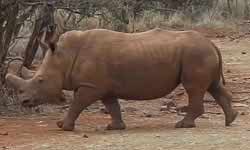
Rhinoceros
 |
Rhino Beetle
- Escarabajo Rinoceronte
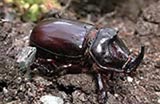
The Rhino Beetle is among the largest beetles. It is the
largest beetle in its habitat, but not in the world. In all horned
beetles, the huge spikes are used by males in combat rather than for
defence against predators.
El
escarabajo rinoceronte es uno de los escarabajos más
grandes. Es el más grande de su hábitat, pero no del mundo.
En todos los escarabajos con cuernos, los machos utilizan
las enormes espinas en combate, no para defenderse de los
depredadores. |
|
Rhinoceros beetles grow to be
between 1 and 2 1/2 inches long. Both sexes have horns, making it
difficult to distinguish between them. Male beetles use these horns
for fighting rival males over feeding sites or females. Rhinoceros
beetles also use their horns for digging, climbing and mating.
Los escarabajos
rinoceronte miden entre 2,5 y 6,3 cm de largo. Ambos sexos tienen
cuernos, lo que dificulta distinguirlos. Los machos los usan para
luchar contra otros machos por los lugares de alimentación o las
hembras. También los utilizan para excavar, trepar y aparearse.
|
|
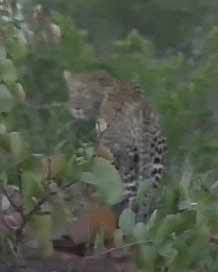
Leopard
- Leopardo
 |
Leopard Tortoise
- Tortuga Leopardo
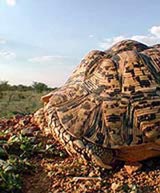
The leopard tortoise
is approximately 2 feet long which is the biggest turtle in Africa.
It weighs 50 to 100 lbs. Its name comes from the color of its shell
which has black and yellow spots, look like a leopard. The young
have dark brown or black leopard patterns on their shells while
adults have smaller spots. Their head, legs, and tail are brownish,
yellow. The shell is shaped like an upside-down bowl. It is hard,
and bumpy. There is a v shaped notch in the front of the shell.
La tortuga
leopardo mide aproximadamente 60 cm de largo y es la tortuga más
grande de África. Pesa entre 23 y 45 kg. Su nombre proviene del
color de su caparazón, que tiene manchas negras y amarillas,
parecidas a las de un leopardo. Las crías tienen manchas de
color marrón oscuro o negro, mientras que los adultos tienen
manchas más pequeñas. Su cabeza, patas y cola son de color
marrón amarillento. El caparazón tiene forma de cuenco
invertido, es duro y rugoso, y presenta una muesca en forma de V
en la parte frontal. |
|
Leopard tortoises have thick
club-like back legs that have scales with claws on their toes. They
don't have webbed feet. The head, legs, and tail can be almost
completely drawn under the shell.
Leopard tortoises live from Eastern Africa to Rest of Africa. Their habitat is a Savannah,which is a grassland, with
rivers.
In the wild, leopard tortoises usually do not mate
until they are between 12 to 15 years old. In captivity, the animals
often grow faster and can be ready to mate between six and eight
years. Male leopard tortoises can be recognized from females by
their longer tails. When the female is ready to lay her egss, she
digs a hole 12 inches deep with her hind feet and lays 5 to 30 white
eggs at three week intervals for twenty weeks. They hatch one year
later.
Las tortugas
leopardo tienen patas traseras gruesas y robustas, con escamas y
garras en los dedos. No tienen patas palmeadas. La cabeza, las patas
y la cola pueden quedar casi completamente ocultas bajo el
caparazón.
Las tortugas leopardo habitan desde África Oriental hasta el resto
de África. Su hábitat es la sabana, una pradera con ríos.
En estado salvaje, las tortugas leopardo generalmente no se aparean
hasta los 12 o 15 años. En cautividad, suelen crecer más rápido y
pueden estar listas para aparearse entre los seis y los ocho años.
Los machos se distinguen de las hembras por su cola más larga.
Cuando la hembra está lista para poner huevos, cava un hoyo de 30
centímetros de profundidad con sus patas traseras y deposita entre 5
y 30 huevos blancos a intervalos de tres semanas durante veinte
semanas. Los huevos eclosionan un año después.
|
Back to the Top of the Page
|
|